
On this page
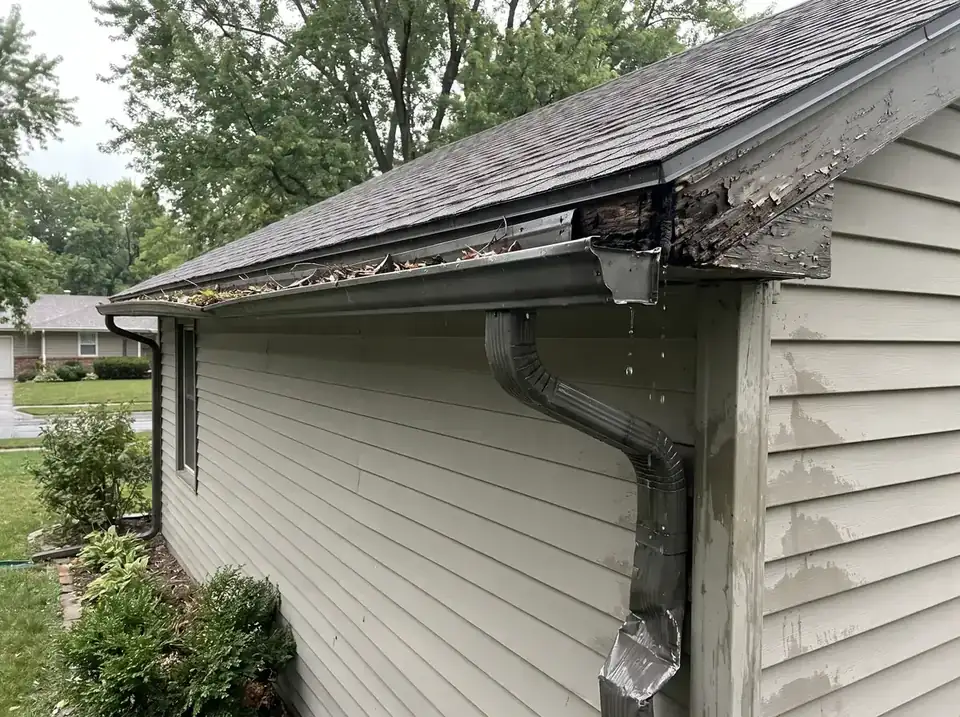
How gutters rot fascia
| Cause | What happens | Fix |
|---|---|---|
| No drip edge, or one too short | Water runs off the shingles, behind the gutter, onto the fascia | Add or extend drip edge |
| Gutter set too low | Water misses the gutter and hits the fascia | Reset the gutter higher |
| Leaking corners | Water soaks the end of the board | Reseal; replace soft wood |
| Overflow | Water runs down the face of the fascia | Clear, re-pitch or upsize |
| Peeling paint | Water gets into bare wood | Scrape, prime and paint or wrap |
Spotting rot from the ground
- Paint peeling in one spot under a corner or a run
- Dark streaks on the fascia face or soffit
- A gutter that pulls away from the house in one area
- Soffit panels sagging, stained or with gaps
- Birds, squirrels or wasps using a gap at the eave
Fascia, moisture and termites in North Carolina
NC State Extension says Eastern subterranean termites are found in every county in North Carolina. They need moisture, and a fascia that stays wet from a leaking gutter, with a damp crawl space below, gives it to them. The state's official wood-destroying insect report lists wood moisture of 20 percent or more as a condition conducive to termites, and the state's structural pest control division lists adding gutters and grading water away among the fixes for moisture problems.
If a contractor opens up fascia or soffit and finds mud tubes, channeled wood or live insects, they should stop, photograph it and show you. Call a licensed pest control company before the wood is replaced and covered.
How fascia repair is done
- Gutters come down along the damaged stretch.
- Rotten boards are cut out back to sound wood.
- Rafter tails are checked behind the fascia; soft rafter ends are repaired.
- New fascia goes up, primed on all sides, or rot-resistant material is used.
- Soffit is repaired where stained or sagging, keeping any vents clear.
- Drip edge is added or extended so water goes into the gutter.
- Fascia is painted or wrapped.
- Gutters are rehung on hidden hangers.
Older Durham houses
Fascia problems are most common on older houses: the mill houses of Old West Durham and East Durham, Queen Anne houses in Cleveland-Holloway and Morehead Hill, and bungalows in Trinity Park, Walltown and Duke Park. On historic houses with decorative cornices or exposed rafter tails, the repair should match the original profile. In a local historic district, ask about review before changing trim.
Cost factors
How many feet of fascia, whether rafter tails need repair, the height, and whether soffit and paint are included. Fascia work is often priced per foot or by the job. Ask for it to be listed separately from the gutter work.
Fascia materials
| Material | Pros | Cons |
|---|---|---|
| Primed pine or fir | Affordable, easy to work | Needs paint; rots if kept wet |
| Cedar | Naturally rot-resistant | Costs more |
| Composite or PVC trim | Does not rot | Different look; expansion |
| Aluminum wrap over wood | Low maintenance | Hides rot if the wood behind is bad |
Soffit vents
Many soffits have vents that let air into the attic. When soffit is repaired, vents should be kept open or replaced so the attic still breathes. A damp attic over a leaking gutter is another place for mold and rot to start.
Matching historic trim
On older Durham houses, fascia and cornice boards are often a profile you cannot buy off the shelf. A careful contractor will match the profile with stacked or milled boards rather than flattening the detail. In a local historic district, matching the original may be required.
The cost of waiting
Fascia rot spreads. A soft spot at a corner becomes a soft board, then a soft rafter tail behind it, then a soffit that sags. Each step costs more to fix. Catching it at the first peeling paint or the first spongy spot keeps the repair to a board or two.
Fascia problems by area
| Area | Common cause |
|---|---|
| Old North Durham, Cleveland-Holloway | Failed built-in gutters, no drip edge |
| Old West Durham, East Durham | Original boards, leaking sectional seams |
| Woodcroft, Parkwood | Corners dripping for decades |
| Newer houses | Gutters set too low, water behind the gutter |